

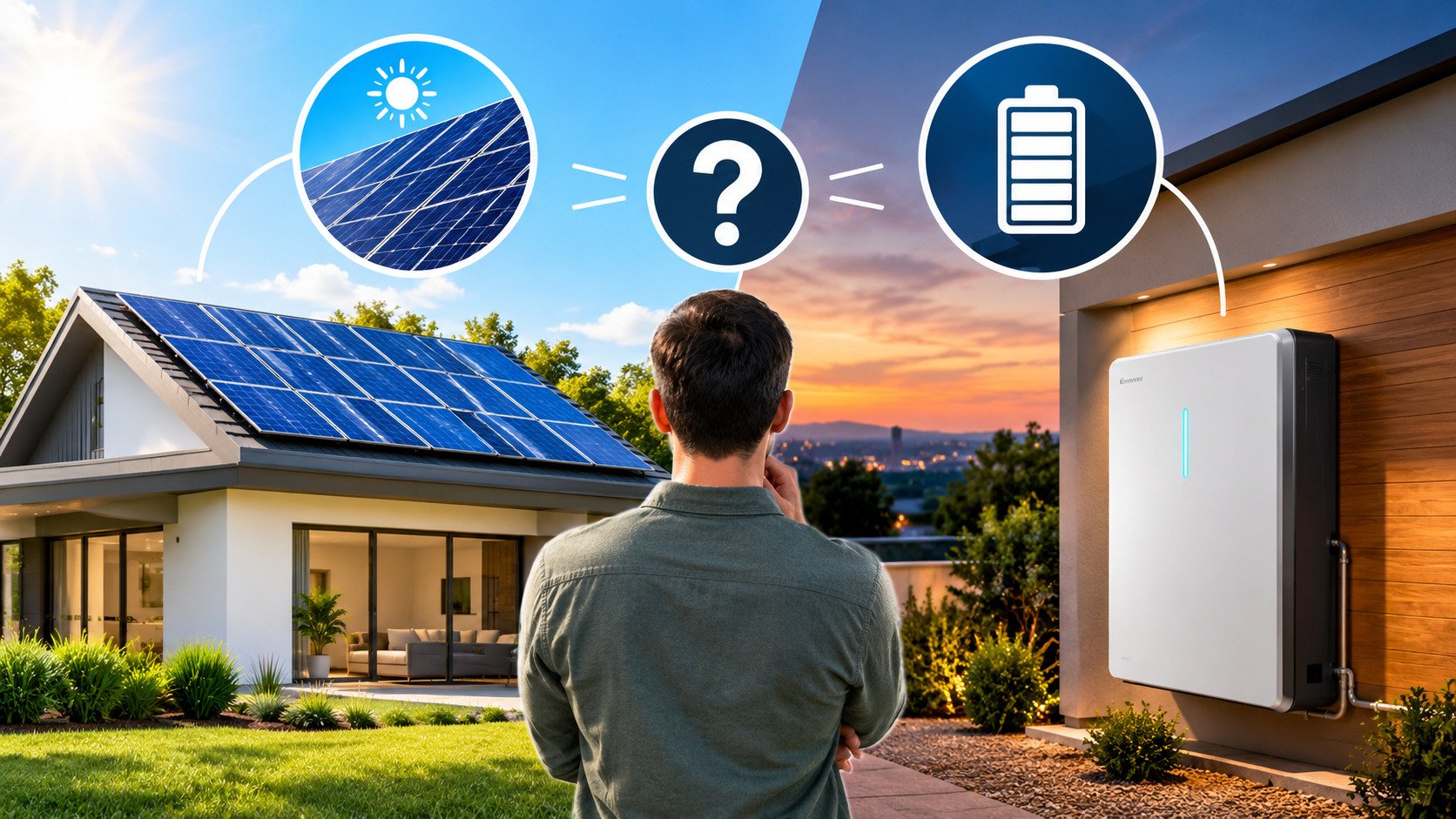
Imagine generating your own electricity during the day but still relying heavily on the grid when the sun goes down. Now imagine having a battery that stores your excess solar energy for use in the evening. Both options sound appealing, but which one should you invest in first?
Choosing between solar panels and battery storage can be confusing, especially when you want to reduce electricity costs without spending more than necessary. The right decision depends on your current energy setup, electricity consumption, budget and long-term goals.
For most Australian households without an existing solar system, installing solar panels first is often the most practical starting point. However, if you already have solar panels, adding a battery could help you make better use of the electricity you generate. Let’s explore how both options work and how to decide which is right for your property.
1. Solar Panels vs. Battery Storage: Understanding the Difference
Solar panels and battery storage serve different purposes, but they work together to help you use renewable electricity more effectively.
Solar panels capture sunlight and convert it into electricity that can power your home’s appliances or business equipment. When your system generates more electricity than you need, the surplus may be exported to the electricity grid or stored in a compatible battery.
A solar battery, on the other hand, stores electricity for later use. This means you may be able to use excess solar energy during the evening, when your panels are no longer generating electricity.
The key difference is simple: solar panels generate electricity, while batteries store electricity for future use.
Understanding this distinction makes it easier to decide which investment should come first.
2. How Do Solar Panels Work?
Solar panels generate electricity by converting sunlight into electrical energy. An inverter then converts the generated electricity into a form suitable for use by your property’s electrical appliances.
During sunny hours, your solar system can help power lighting, refrigerators, air conditioners, computers and other equipment. If your panels generate more electricity than your property consumes, the excess energy can potentially be exported to the grid or stored in a battery.
The amount of electricity your system produces depends on several factors, including roof orientation, shading, panel capacity, weather conditions and system design.
For households and businesses that consume substantial electricity during daylight hours, solar panels can be particularly useful because the generated electricity can be used directly.
Installing a suitably sized system is therefore an important first step towards making better use of solar energy.
3. How Does Solar Battery Storage Work?
Solar battery storage allows you to keep some of the excess electricity generated by your solar panels and use it when your system is producing less power.
For example, your panels might generate more electricity than your household needs during the afternoon. Instead of exporting all the surplus electricity to the grid, a compatible battery can store some of it for use later.
This can be especially useful in the evening when household activities increase electricity consumption.
Modern Solar Battery Storage Systems can help households improve their use of self-generated electricity. However, the actual benefits depend on battery capacity, system efficiency, electricity tariffs and how much stored energy you use.
Before choosing a battery, consider your evening electricity consumption, existing solar system and future energy requirements. A battery that is too small may not meet your needs, while an oversized system may cost more than necessary.
It is also important to understand that battery storage does not automatically provide backup power during a blackout. Suitable backup equipment and an appropriate system configuration may be required.
4. Why Should You Usually Install Solar Panels First?
If your property does not have solar panels, starting with solar installation is often a sensible approach.
The main reason is that a battery needs an electricity source to charge. Solar panels can provide that source by generating electricity from sunlight.
Here are several reasons why installing solar panels first may make sense.
Reduce daytime grid electricity consumption: Your property can use the electricity generated by your panels instead of purchasing the same amount from the grid, depending on your consumption and solar production.
Create opportunities for future battery storage: You can evaluate your energy usage after installing solar panels and decide whether adding a battery would offer worthwhile benefits.
Make use of available roof space: A well-designed solar system can be planned around your property’s energy requirements and suitable installation area.
Understand your actual energy needs: Monitoring your electricity consumption can help you make a more informed decision about battery capacity later.
However, installing solar panels first does not mean every household should delay battery storage indefinitely. If you have specific backup requirements or a suitable existing system, a different approach may be appropriate.
The goal is to invest in a system that matches your needs rather than paying for equipment that provides limited practical value.
5. When Should You Choose Battery Storage First?
Battery storage may be the logical next investment if you already have solar panels installed.
Many households generate excess electricity during the day but consume more power in the evening. A battery can help bridge this gap by storing surplus solar energy for later use.
Battery storage may be worth investigating if:
- Your existing solar system regularly exports surplus electricity.
- Your household uses substantial electricity after sunset.
- You want to increase the proportion of your electricity consumption supplied by your own solar generation.
- You have suitable space and equipment for a compatible battery installation.
- You want backup power and are prepared to install the additional equipment required.
Before proceeding, compare the cost of battery installation with the potential value of the electricity you could use from storage.
Your electricity tariff, solar export rate, battery efficiency and usage patterns all influence the financial outcome.
Exploring suitable Solar Battery Storage Solutions can help you identify an option that fits your existing system and energy goals.
Remember that a battery is not automatically the best investment simply because your solar panels export electricity. The potential savings should justify the additional cost.
6. Residential vs. Commercial Solar: Which Should Come First?
The best investment order can differ between homes and businesses because their electricity consumption patterns are often different.
Residential Solar Systems
For most households without an existing solar system, solar panels are a practical starting point.
Consider when your family uses the most electricity, whether someone is home during the day and how much power you typically consume after sunset.
If your household uses most of its electricity during daylight hours, solar panels alone may meet a substantial portion of your demand. If evening consumption is higher, adding a battery may improve the usefulness of your solar generation.
The decision should be based on your actual consumption rather than simply choosing the largest available system.
Commercial Solar Installation
Businesses often have different energy requirements from residential properties.
Offices, warehouses, retail stores and other commercial premises may consume substantial electricity during operating hours. This can make daytime solar generation particularly valuable.
A carefully planned Commercial Solar Installation can help businesses use solar electricity directly to support their daily operations.
However, businesses operating late into the evening or requiring electricity outside normal solar generation hours may also benefit from evaluating battery storage.
Effective Commercial Solar Solutions should consider operating hours, equipment loads, available roof space, electricity tariffs and future business expansion.
For commercial properties, the most suitable option depends on the relationship between electricity demand, solar generation and the cost of storing unused energy.
7. Cost, Savings and Payback: What Should You Consider?
The upfront cost of solar panels and battery storage can vary considerably depending on system size, equipment, installation complexity and property requirements.
Instead of comparing purchase prices alone, consider the potential long-term value of each investment.
Start by reviewing your electricity bills to understand how much electricity you use and when you use it. This information can help determine whether daytime solar generation or evening battery storage would provide greater value.
You should also consider:
- Installation costs: Compare the total installed cost of each option.
- Electricity tariffs: Understand the rates you pay for imported electricity and receive for exported solar power.
- Energy consumption: Identify whether your main electricity demand occurs during the day or evening.
- System efficiency: Account for energy losses when storing and discharging electricity.
- Maintenance and warranties: Review equipment warranties, operating requirements and expected service life.
- Available incentives: Check current government rebates and eligibility requirements before making financial projections.
For some households, solar panels may provide a more attractive initial investment. For others with existing solar systems and suitable electricity tariffs, battery storage may offer additional value.
Avoid assuming that a battery will automatically eliminate electricity bills. Grid charges, energy consumption and periods of low solar generation can still affect your costs.
A realistic assessment should compare the total investment with the expected savings over the system’s useful life.
8. Can You Install Solar Panels and Battery Storage Together?
Yes. Solar panels and battery storage can be installed as part of an integrated energy system.
Planning both together may help you select compatible equipment and consider your future energy requirements from the beginning.
For example, a household planning to purchase an electric vehicle or increase its electricity consumption may want to consider future charging and storage requirements when designing its solar system.
Installing both technologies together can also simplify some aspects of system planning, although the overall cost and installation requirements will depend on the property and equipment selected.
If you already have solar panels, adding a battery may also be possible. However, inverter compatibility, electrical requirements and the existing system configuration must be assessed before installation.
The most suitable approach is to choose equipment that meets your current needs while allowing for realistic future upgrades.
9. How to Decide Which Option Is Right for You
Before investing, ask yourself these five questions:
1. Do I already have solar panels?
If not, solar panels are often the best starting point. If you already have them, evaluate whether a battery could improve your energy usage.
2. When do I consume the most electricity?
High daytime consumption may favour solar panels, while substantial evening consumption may make battery storage worth investigating.
3. What is my budget?
Compare the cost and expected benefits of each option before committing to an investment.
4. Do I need backup power?
If keeping selected appliances running during a blackout is important, investigate a battery system with suitable backup functionality.
5. What are my long-term energy plans?
Consider future changes such as working from home, purchasing an electric vehicle or expanding your business.
Answering these questions can help you avoid unnecessary expenditure and choose a system that better matches your requirements.
Conclusion: Make the Right Solar Investment for Your Property
For most Australian properties without an existing solar system, solar panels are a sensible first step because they generate electricity that can be used directly. Battery storage can become a valuable addition when storing excess electricity for later use makes financial and practical sense.
The best decision ultimately depends on your energy consumption, budget, property characteristics and future goals. Comparing these factors before investing can help you build a more effective and reliable solar energy system.
If you are considering solar for your home or business, Suntech Synergy can help you explore suitable options for your property. Speak with experienced Solar Installers Melbourne to assess your energy requirements and determine whether solar panels, battery storage or a combination of both is the right fit for your needs.